What Is ADHD?
THE DEPTH OF ADHD
ADHD Explained

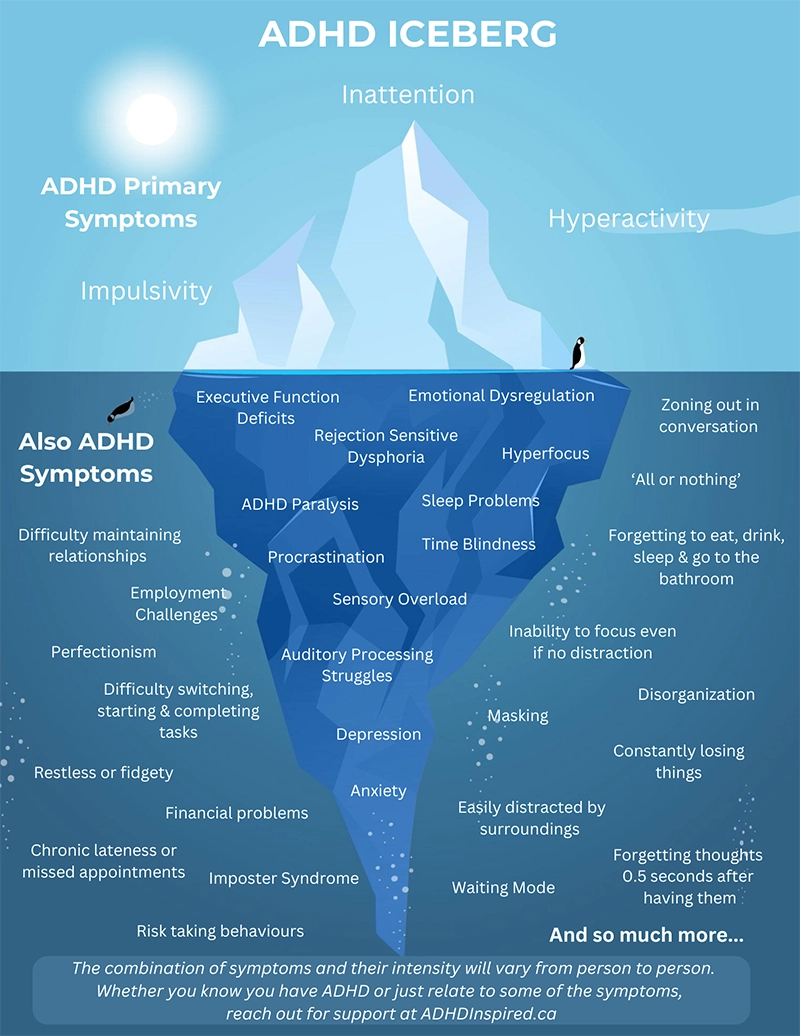
Attention Deficit Hyperactivity Disorder is a complex neurodevelopmental condition that affects how one’s brain develops and functions. Although the primary symptoms of ADHD are inattention, hyperactivity &/or impulsivity, there is so much more going on beneath the surface!
The symptoms of ADHD are due to impairments of the brain’s executive functions which allow a person to manage their thinking and behaviour, making everyday tasks and responsibilities more difficult than they should be. ADHD can impact one’s ability to organize, plan, prioritize, initiate and complete tasks, maintain focus, manage time, manage impulsivity, regulate alertness, emotions and working memory recall.
While anyone can experience executive function challenges some of the time, for people with ADHD, the challenges experienced are constant and persistent.
Since no two ADHD brains are the same, every person’s ADHD experience is completely unique. Symptoms can vary from person to person in type and severity; ranging from mild to severe.
On the surface, ADHD can appear as a behavioural issue. When in fact, the behaviours displayed are due to differences in one’s brain chemistry and structure. A person with ADHD can no more control their symptoms than a person with asthma or poor eye sight can control theirs.
HOWEVER — Managed well, ADHD can be an exceptional gift!
Common strengths and talents of people with ADHD include: creative, resourceful, out of the box problem solver, intelligent, fun, willing to take risks, ability to hyper-focus, never boring, curious, good negotiator, musically intuitive, charming, imaginative, curious, see details others miss, inspiring, different, energetic, courageous, resilient, adventurous, empathetic, tenacious, calm in a crisis, and the list goes on and on.
In fact, many of the worlds’ greatest minds including nobel prize winners, inventors, entrepreneurs, athletes, authors and entertainers (comedians, actors, singers, directors, etc.) have ADHD with several attributing their successes to it.
EXPLORE YOUR JOURNEY
ADHD Explained
Attention Deficit Hyperactivity Disorder is a complex neurodevelopmental condition that affects how one’s brain develops and functions. Although the primary symptoms of ADHD are inattention, hyperactivity &/or impulsivity, there is so much more going on beneath the surface!
The symptoms of ADHD are due to impairments of the brain’s executive functions which allow a person to manage their thinking and behaviour, making everyday tasks and responsibilities more difficult than they should be. ADHD can impact one’s ability to organize, plan, prioritize, initiate and complete tasks, maintain focus, manage time, manage impulsivity, regulate alertness, emotions and working memory recall.
While anyone can experience executive function challenges some of the time, for people with ADHD, the challenges experienced are constant and persistent.
Since no two ADHD brains are the same, every person’s ADHD experience is completely unique. Symptoms can vary from person to person in type and severity; ranging from mild to severe.
On the surface, ADHD can appear as a behavioural issue. When in fact, the behaviours displayed are due to differences in one’s brain chemistry and structure. A person with ADHD can no more control their symptoms than a person with asthma or poor eye sight can control theirs.
HOWEVER — Managed well, ADHD can be an exceptional gift!
Common strengths and talents of people with ADHD include: creative, resourceful, out of the box problem solver, intelligent, fun, willing to take risks, ability to hyper-focus, never boring, curious, good negotiator, musically intuitive, charming, imaginative, curious, see details others miss, inspiring, different, energetic, courageous, resilient, adventurous, empathetic, tenacious, calm in a crisis, and the list goes on and on.
In fact, many of the worlds’ greatest minds including nobel prize winners, inventors, entrepreneurs, athletes, authors and entertainers (comedians, actors, singers, directors, etc.) have ADHD with several attributing their successes to it.
Frequently Asked Questions - ADHD
What is the best treatment for ADHD?
There is no one best treatment for ADHD. In fact, a combination of multiple treatment methods is what’s recommended. Learning about ADHD and connecting with others who understand is an important first step.
Lifestyle changes that include quality sleep, mindfulness practises, a healthy (protein rich) diet, and exercise can go a long way to managing symptoms. ADHD coaching, psychoeducation, behavioural therapy, medication, supplements, and parent training all provide their own unique benefits. There are many alternate treatments options as well. While accommodations are not necessarily a treatment for ADHD, they can help students and employees manage their symptoms and participate more fully in school and work.
As unique as each person’s ADHD symptoms are, so will be the treatment methods that works best for them.
If I seek a diagnosis for ADHD, will I have to take medication?
Medication for ADHD is a personal choice. For some, medication is not an option due to other health conditions or history. It’s important to consult with your doctor to determine if it is an appropriate fit for you.
Should you choose to try ADHD medication, there are both stimulant and non-stimulant options. Keep in mind that it sometimes can take a bit of trial and error (under your doctor’s guidance) to find the right medication and dosage for your unique brain chemistry. It’s also important to note that while medication can help to significantly reduce ADHD symptoms, it only works while you’re taking it. Pills don’t teach the executive function skills needed to thrive with ADHD. Medication can, however, help support you while you put those new skills and strategies into place so that in future, medication may no longer be needed.
I can relate to the symptoms and suspect I may have ADHD, now what?
One option is to complete the World Health Organization’s Self-Report Symptom Checklist to see if you might have Adult ADHD. This is not a diagnostic test so you’ll need to find a qualified professional to confirm these results. Diagnosing ADHD is an in-depth process that involves gathering information from multiple sources. It requires extensive knowledge, skills and training, and can only be done by a certified professional. In Canada, a qualified medical doctor, pediatrician, psychologist, psychiatrist or nurse practitioner can diagnose ADHD.
Whether you seek a diagnosis or not, if you are having symptoms of Adult ADHD it is best to discuss this with your doctor as many health conditions can mimic ADHD. Some are medical emergencies and some are more common like allergies, lack of sleep, and stress. It’s important to speak with a healthcare professional about your symptoms to rule these out.
Any other interesting fact about ADHD you can share?
ADHD is highly hereditary, has no correlation with intelligence and does not discriminate in that it can be found in people of all ages, genders and ethnicities. It is one of the most common neurodevelopmental conditions and it’s estimated that 1 in 10 adults have ADHD. In fact, adult women are the largest undiagnosed group in the ADHD population; many of whom are just now learning about their ADHD at mid-life or even late into retirement.
Where can I go to learn more about ADHD?
There is a lot of excellent information on the web, but a lot of inaccurate information as well. If you choose to enter your email address below, I’ll send you my complementary ADHD Resource Guide that includes a comprehensive list of sources you can trust.
Still have questions? Shoot me a message.
Subscribe & Find Your Way Forward!
to the 2 most important things for ADHD.
By subscribing, you’ll be one of the first to know about exciting new services including groups for coaching, support and accountability!
I value your privacy and will never share your information. You can unsubscribe at any time.